Flickrstorm – easy search for creative commons photos

Tonight I’ve been sourcing a picture to use for a slide that is going towards a collaborative presentation stemming from our Powerful Learning Practice cohort.  Darren Kuropatwa, our community leader, got the ball rolling (excuse the pun!), for Presentation Tennis.  We’re creating a slide deck using google docs (their presentation option) and creating contrasting slides to represent “Teaching well”. When it’s completed it will be uploaded to slideshare and part two of the challenge will begin. One of the challenges is to find images with a creative commons licence that can be used  giving attribution to the creator.

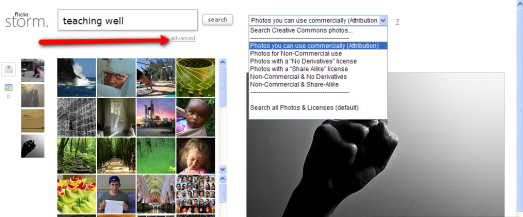
For my effort tonight I went to Flickrstorm. This is a great site for finding quality images that can be used legally giving attribution to the creator. When you reach the site click on ‘advanced’ and a drop down box enables that gives you options for creative commons pictures and the different licences they hold. See below screenshot;

flickrstorm1

David Jakes has a really helpful wiki where he explains many new technologies.  He speaks of flickrstorm when he is presenting about digital storytelling.  I’m sure you would find information about flickrstorm there if you were looking for more detail. David has recorded a screencast that is available on TeacherTube. It won’t embed here so you’ll have to click the link to view it.

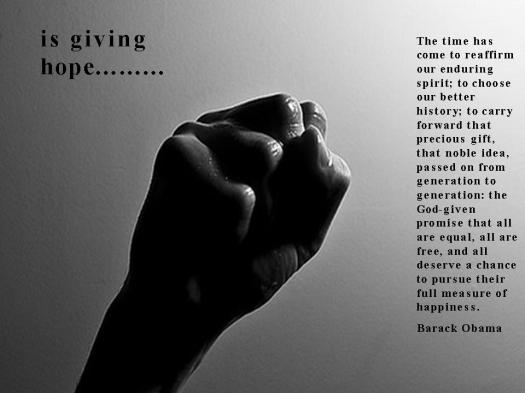
And just for the record, here is the slide I created tonight.

plp-slide

(Day 108-365 Year 2 by flickrstorm user thp365 )

Reblog this post [with Zemanta]

Don’t reinvent the wheel

I’m a firm believer in not reinventing the wheel. I’ve been in plenty of staffrooms where people covet their lesson plans and refuse to share. I’ve never done that. In the days of hard copy, I’d photocopy a worksheet and lay it on the desks of teachers who taught the same subject. I just can’t see the point of not sharing and making the load easier for others. I know I always appreciate it when other teachers share their ideas, but it’s a sad fact of life that it doesn’t always happen.

Andrew Churches has a wonderful wiki called Educational Origami where he shares many of the resources he has created. Today I was reading his blog and discovered posts he had written about starter sheets he has created about a variety of Web 2.0 apps.  They are available to download as a PDF and I’m assuming he is fine to have people use them in their schools. I couldn’t find a creative commons licence on them so I’m a bit unclear about this. (Hopefully he’ll read this post and provide some clarification in a comment).

Starter Sheets are available for Delicious, Voicethread, Google Maps, Wikispaces and Google Advanced Search. The advanced search has an extension sheet explaining Boolean Searches. They are attractively presented and link to the Bloom’s Digital Taxonomy that he created. If you haven’t seen that yet you must. It’s invaluable for curriculum planning with the integration of technology in mind.

external image voicethread-page2-212x300.jpg

So, don’t go reinventing the wheel. Access this fabulous wiki and download the PDFs. I can see them looking just great laminated and used as resources for staff and students alike. Thanks Andrew.

* Update.   Andrew Churches responded in a comment;

Teaching is about sharing and collaboration, it’s not a competition. Please feel free to use the resources and materials on the wiki. Everything published on the wiki is under the creative commons licence.

If you have any suggestions, recommendations or perhaps more importantly corrections let me know I appreciate the feedback.

I love this line. “Teaching is about sharing and collaboration, it’s not a competition.”

It sure is.


Reblog this post [with Zemanta]

YouTube and copyright – the dilemma for educators

I love YouTube. I love the way it enables the everyman to generate content and connect with an audience. Just look at the remarkable things that can happen when a YouTube video goes viral. ‘Did you know?’ is a classic example. There’s unassuming Karl Fisch creating a PowerPoint presentation for a staff meeting and what happens – his slides are uploaded to YouTube in a video with music and are watched approx. 4 million times or so. Amazing.  

My students know the power of YouTube. Last year we set our Yr 8 students the task of creating a trailer (like something you’d see at the movies) for a novel they’d read as a literature circle study. One group read ‘The Hitchhikers Guide to the Universe’ and created a great video that they uploaded to YouTube. They’ve had 347 views and love checking their stats. YouTube gives our students an authentic audience – they’re looking to attract an audience rather than just present work for the one person -the teacher. That’s pretty empowering stuff.

The students I teach love it when we begin a class with a video from YouTube. I love the ‘hook’ effect they have; because a large number of them are less than five minutes they are the great way to begin a lesson. Students are focused and they often prompt wonderful class discussion. Yesterday I visited Coburg Senior Secondary College to look at their learning spaces and curriculum offerings. A Year 10 class I observed watched this video to evoke some reaction to the issue of climate change;

They were hooked watching this – no doubt – and it prompted interesting discussion. There weren’t any bandwith problems at Coburg so the streaming from YouTube was pretty much instantaneous. Not so where I teach. It’s a 1:1 wireless environment but streaming from YouTube is a drawn out process. If you want to watch a YouTube video you need to load it prior to the class and have it ready to replay. One option is to use a a video conversion site like Keepvid to cache the video from YouTube for use in class. This way you have guaranteed success with one catch- it goes against the copyright laws of this country. 

I’m wondering about the future of copyright and what may happen now that user generated content is really taking off. Will we see a backlash against copyright regulations? Will we see users post their content and stipulate that it can be used and reformatted so that educators can employ it in classrooms to convey important messages? Will more people use creative commons licences to allow their work to be used easily in educational settings? Will the copyright council be able to stem the flow of infringements to the law as more and more educators realise the potential benefits of YouTube to provide useful content for classroom instruction?    


Transformativeness – new word for me but it makes sense

For a long time now I’ve struggled with how to interpret the fair use provision when it comes to Copyright law. It’s a vexed issue for we educators, and particularly those of us who work in school libraries. I’ve been having my students create Digital Stories for awhile now and have tried to impress on them the best way of accessing music and images from the web is via sites that put their content out there under Creative Commons licencing. They find this difficult however, particularly when it comes to music. Very often they know just the right song that fits the message they are trying to convey. Here in Australia, there is a clause related to use of music and sound recordings in student work;

“There is no general provision that allows people to copy for personal or private use. However, the Copyright Act does contain provisions which students may sometimes be able to rely on, including when they want to use music and sound recordings in films and videos they make as part of a course of study. In particular, a student may be able to deal with copyright material for research or study, provided the use is fair. An example of fair dealing for research or study may be using music in a film which is to be submitted for a school or university project, but which you do not intend to show outside the classroom or distribute further.” (Australian Copyright Council p.3)

Tonight I was following the discussion on Twitter when Kristin Hokanson alerted me to her post about copyright confusion. This in turn led to Joyce Valenza’s post  for the School Library Journal entitled, ‘Fair use and transformativeness: It may shake your world’. After reading it, I can say my world has been shaken. Joyce attended a meeting at which Renee Hobbs and Peter Jazsi outlined an interpretation of fair use that she had not considered. Her understanding at the end of the session was this;

“I learned on Friday night that the critical test for fairness in terms of educational use of media is transformative use. When a user of copyrighted materials adds value to, or repurposes materials for a use different from that for which it was originally intended, it will likely be considered transformative use; it will also likely be considered fair use. Fair use embraces the modifying of existing media content, placing it in new context.” 

The word transformative is key here. The suggestion is (I think!) that if a student uses an image or piece of music and adds value to it by maker it richer as a result of its association with what they have produced then the use is fair. I can relate this to the digital stories my students have produced .Often they will use a commercial piece of music but its connection with the images and intention of the students’ work is transformative to that music selection – it means something else other than what its lyrics may have been originally intended for. I may have this completely wrong and please correct me if I have, but that is my understanding of what transformative means.

Joyce summed up her article by condensing her understanding to these points;

  • The Multimedia Fair Use Guidelines describe minimum rules for fair use, but were never intended as specific rules or designed to exhaust the universe of educational practice.  They were meant as a dynamic, rather than static doctrine, supposed to expand with time, technology, changes in practice.  Arbitrary rules regarding proportion or time periods of use (for instance, 30-second or 45-day rules) have no legal status. 
  • The fact that permission has been sought but not granted is irrelevant.  Permission is not necessary to satisfy fair use.
  • Fair use is fair use without regard to program or platform. What is fair, because it is transformative, is fair regardless of place of use. If a student has repurposed and added value to copyrighted material, she should be able to use it beyond the classroom (on YouTube, for instance) as well as within it. 
  • Not every student use of media is fair, but many uses are. One use not likely to be fair, is the use of a music soundtrack merely as an aesthetic addition to a student video project. Students need to somehow recreate to add value.  Is the music used simply a nice aesthetic addition or does the new use give the piece different meaning? Are students adding value, engaging the music, reflecting, somehow commenting on.the music?
  • Not everything that is rationalized as educationally beneficial is necessarily fair use.  For instance, photocopying a text book because it is not affordable is still not fair use.
  • Joyce is speaking from an American perspective but I think there is much to be learned from her article. We are living in transformative times and our students are active creators now that there are accessible tools making creation relatively easy – if only copyright law could follow suit and provide us with clear (read easy to understand) guidelines that will benefit the learning taking place in our classrooms today.

    (sorry about formatting problems in this post – it’s late here, I’m tired and haven’t got the energy to sort them out!!)