Join us to work together 2 make a difference for fire ravaged Victoria.

A street...
Image by Getty Images via Daylife

Yesterday I posted about the natural disaster that has ravaged the Victorian countryside. Sheryl Nussbaum-Beach read my post and offered to help in any way she could. My good friend Angela Stockman, who I collaborate with on Working together 2 make a difference,  also wanted to know what she could do to help. Here we have two Americans reaching out to assist those in a country very distant from their own. Why do they want to help? Firstly no doubt, because they are sensitive people with a desire to assist their fellow citizens of the world. Perhaps they are motivated also because they have formed connections through these networks we are working in and feel a link to a country far from their own.

Sheryl spoke with me tonight and has commited to help me, Angela and other educators who may wish to join us, to do whatever it is we can to raise funds to support those in need. The Red Cross has coordinated a fundraising effort here in Australia. What we are encouraging you to do is to join Working together 2 make a difference  and post your efforts there. We will set up a paypal account that will direct the monies you raise to the Red Cross appeal.  Here’s what I’ve posted on the Working together 2 make a difference site to enocurage participation;       

Victoria, the State I live in in Australia, has been hit by a tragic natural disaster that is affecting the lives of many of our country communities. On Saturday the 7th of Feb., bushfires, fanned by fierce northerly winds in 46 degree celcius temperatures, ravaged our countryside, leading to the deaths of 173 people. This figure is http://www.abc.net.au/news/stories/2009/02/10/2487517.htm?section=australia”>expected to rise to over 200 in the coming days as they gain access to affected areas and search homes. Native animals, livestock and family pets were other victims of this disaster.

So how can we all make a difference? We would love to see our education community from near and far band together to support the communities in need. What is needed is money to help schools rebuild, families rebuild their lost homes and for communities to build the infrastructure needed that has been lost in these fires.

What can you do?  Anything that will help your students to understand the need to help others when the situation is dire. Be it a sausage sizzle, free dress day, bake sale, whatever it takes to raise a few dollars that can be used to support others. In the next few days, with the help of Sheryl Nussbaum Beach and some wisdom fron Clarence Fisher, we’ll be setting up a paypal account to direct funds you raise to the Red Cross appeal that has been set up to support those affected. Create a page here and let us know your plans. We can support one another and link our schools to a common cause. Let’s show the world how the education community can use the tools at our disposal to connect and support one another for a common purpose.     

So, wherever you are in the world, think about helping out those in need here in Australia. And let’s see just how small our world really is when we connect using these tools for the common good.


Reblog this post [with Zemanta]

Firestorm hits Victoria

Bushfires rage out of control from the Bunyip State Park.

Bushfires rage out of control from the Bunyip State Park. (Photo: Jason South)

Unfortunately, my worst fears from my Friday post were realised yesterday when horrendous weather conditions led to firestorms throughout parts of Victoria. To date there have been 86 recorded deaths but it is expected that more loss of life will be uncovered as authorities gain access to hard to reach places. 

Yesterday was truly awful. Temperatures around 46 degrees celcius with a fierce North wind that blew in in the afternoon. According to news reports, the fire hit places like Kinglake so quickly that  people were unable to escape to safety. News tonight informed us that Brian Naylor, a former Melbourne newsreader who was the face of Channel 9, perished in the blaze along with his wife. This will bring this tragedy home to many; Brian Naylor was the comforting elder who was in your home, delivering the news every night at 6.00pm.

Our students tomorrow will need time to talk this weekend through. They will need to try and make some sense of a tragedy that no-one could control. I hope classroom teachers forget curriculum for awhile and allow their students to share and discuss. Sometimes that is just what is needed and now is one of those times.

School’s out Friday

Now this is funny. So I’m ordering you to watch it and brighten up your day by enjoying the pleasure of laughing out loud. I’ve watched it a couple of times now and even though I know what’s coming I still find those tears rolling down my cheeks.  Happy ones, not sad!

I hope we’ll all still be laughing tonight. Today represents the most extreme weather conditions we’ve seen all summer being faced in Victoria. Melbourne is predicted to reach a temperature of 44 degrees celcius.  We’ve been in the grip of a water crisis and our State is tinder dry. Bushfires are a constant summer threat with extremely dry undergrowth. We live with water restrictions and I am saddened by the sight of the glorious Liquid Amber in my frontyard struggling to exist. 

So, I hope tonight I’m sharing a glass of wine and good conversation with friends and  not glued to the TV (or internet) tracking the progress of bushfires.

Enjoy your weekend, Go on, watch lost luggage again. I promise you’ll laugh second time round too!

Australian Screen – great resource

I looked at Australian Screen a year or so ago but didn’t explore it fully. This week we’ve been searching for material to support our text study of Bye Beautiful. We’ve been uploading videos to our Yr 9  Ning chronicling life in 1960’s Australia to help our students contextualise what it is they are reading.

Megan, who I work closely with, visited Australian Screen and located some fantastic  short clips about the shame of teenage pregnancy in the 1960’s. They’ve been cropped from documentaries and are perfect for what we need. We’re not interested in a 30 min documentary, we want a short grab that can pique interest and spark discussion. The clips we’ve been using are downloadable as MP4 files and can be uploaded into our Ning site from our computers.  Here’s one of them depicting societal attitudes of the time.  

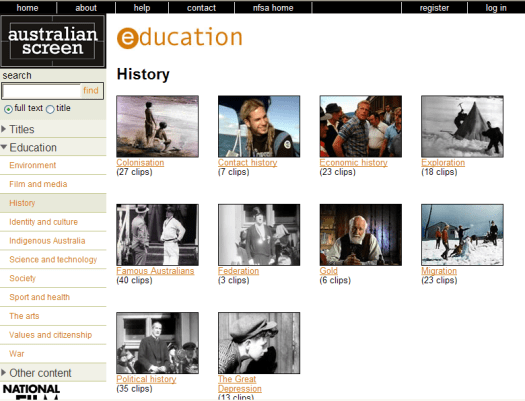
They have an Education section. Below is a screenshot to give you some idea of the resources you can locate.

australian_screen

Here is what they say on their home page about their site;

Australia’s audiovisual heritage online

australianscreen is a look at the Australian film and television industry, from its earliest days to the present.

You can view clips from Australian feature films, documentaries, TV programs, shorts, home movies, newsreels, advertisements, other historical footage, and sponsored films produced over the last 100 years, with curators’ notes and other information about each title. The site currently contains clips from over 1,000 titles and is constantly being added to.

You can also visit our education page for educational content provided by The Le@rning Federation. All clips with teachers’ notes are marked by the e symbol.

*And just a update on progress with the Ning. All is going very well. Students are participating in forum discussions and have even added some themselves. It’s very early days but we are finding that it is becoming an excellent means of locating and storing resources to support curriculum. A mini LMS – very useful. I have had to have a discussion about appropriate use of the site for our purpose. They were engaging in the send a ‘Hi there ha  ha ha’ type messages back and forth while in class. A quick discussion about the fact that this in not their facebook or myspace site was employed at that stage. We do need to form community, but a learning community, not       I’ll keep you updated.

Service learning = responsible teaching. Join Working together 2 make a difference.

working_together_2_make_a_difference

There are some things you do because you have to, and there are some things you do because they’re important.  Working together 2 make a difference is something I do because it’s important. I don’t do it alone. I work with Angela and Laura Stockman from New York State who believe in it just as much as I do.   

But we’d like to see it grow. We have 44 members currently from Canada, Australia, New Zealand and the United States , but we’d  love to see our reach extend to more participants from all corners of the globe. Angela sums up what we’re looking for with this;

We’re eager to encourage membership and make this space valuable to those who join, but I don’t think that any of us wants to have more of a presence in this space than any other member. We truly want to encourage collaboration and meaningful participation. In short, we WANT people to WANT to be there.

Take a look at Mike Poluk’s page. Here’s a teacher from Canada inspiring his yr 5 students to do something positive. Teenager Sarah Hanson has got behind us and has written an article that will be published in a WNY newspaper in the near future. Helen Page has done great things with Year 9 students from her public school here in Australia. Amanda Ritter is embarking on her efforts and is embedding it into curriculum. All of  these examples inspire me to encourage and support the students I teach in their efforts.   

I don’t  know if you’ve ever done something that makes a difference to the lives of others. It is truly something to experience that feeling of giving and it’s a feeling we need to allow our students to experience. Join the site and do something within your school community that will help out others in need. You’ll feel good, your kids will feel good and you’ll be making a difference.

Ning – why would you use it?

Image representing Ning as depicted in CrunchBase
Image via CrunchBase

Why?

Because a ning helps build community amongst your students. And a community that is supportive of one another and where students feel comfortable sharing is one where learning can thrive.

So what does it need to achieve this? It needs motivated and interested leaders who can prompt discussion and help foster it. It needs buy in.

It’s what I’m trying to develop this year with  the Year 9 English students and staff at my school. I posted this comment on our International PLP ning in reference to it;

 I launched a ning this week for our Yr 9 English students- approx 80 students in all. More than half the yr level have already joined and some are posting comments over the weekend. One student even signed up at 10.55pm tonight! When I introduced it I made it clear that at this stage it was for our school community, but explained that we may invite classrooms from beyond our school in or eventually make it open. Right now, I’m interested in seeing how community forms amongst the yr level inside the ning. I’m pretty sure my colleagues will be supportive and will encourage their students to participate.

The sheer fact that kids have been participating without prompting has me excited. Now we have the platform to showcase what they can do. I hope to get them working on some digital tasks that they can upload and share with their peers. Linking our classrooms is the first step. Next step, the world! 

One of the things I think I’ve observed over the past year is that there are many people in our networks who participate but don’t do. I think I ‘do’ or at least try to. We have to start thinking about the tools we can use that are going to extend the thinking of our students and help them make some connection to the idea that they can make use of these tools for their educational benefit. When I launched this with the students I asked them did they belong to any social networks. They didn’t know what I was talking about – the language was unfamiliar to them. When I mentioned myspace and facebook at least 95% raised their hands. I’m hopeful they will start to see the connection between what they are doing socially and what they are going to be doing educationally. Then they may see how it is they can create a very positive digital profile for themselves that will serve them well as they make their way through life.

I’ll keep you posted as to how our community forms and what kind of buy in we have. And I promise I’ll be honest about it. If it’s not succeeding I’ll let you know, and if if it’s thriving, I’ll be doubly sure to let you know!!    


Reblog this post [with Zemanta]

School’s out Friday

My husband sent me this video during the week and it brightened the day for a colleague and myself. It was uploaded to YouTube in 2006 so you may have already seen it. How they put this together intrigues me -there are definitely some very clever people out there.

We are melting here in Melbourne right now. The temperature has been 41Degrees celcius + for the last three days and it looks like there is another one heading our way tomorrow.  There is little respite next week with temperatures forecast to be in the 30’s all week. Of course, school began back this week, just when the heat of summer set in. The kids are restless and tired and we are all searching for the elusive sniff of a breeze but there is none in sight.

The Library I work in is not air conditioned but home is, so I intend to hibernate!  Enjoy whatever comes your way this weekend.

Flickrstorm – easy search for creative commons photos

Tonight I’ve been sourcing a picture to use for a slide that is going towards a collaborative presentation stemming from our Powerful Learning Practice cohort.  Darren Kuropatwa, our community leader, got the ball rolling (excuse the pun!), for Presentation Tennis.  We’re creating a slide deck using google docs (their presentation option) and creating contrasting slides to represent “Teaching well”. When it’s completed it will be uploaded to slideshare and part two of the challenge will begin. One of the challenges is to find images with a creative commons licence that can be used  giving attribution to the creator.

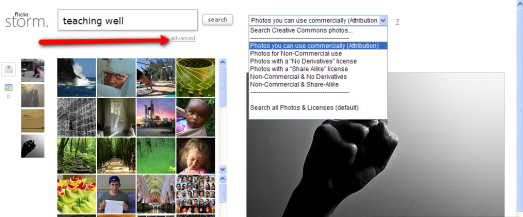
For my effort tonight I went to Flickrstorm. This is a great site for finding quality images that can be used legally giving attribution to the creator. When you reach the site click on ‘advanced’ and a drop down box enables that gives you options for creative commons pictures and the different licences they hold. See below screenshot;

flickrstorm1

David Jakes has a really helpful wiki where he explains many new technologies.  He speaks of flickrstorm when he is presenting about digital storytelling.  I’m sure you would find information about flickrstorm there if you were looking for more detail. David has recorded a screencast that is available on TeacherTube. It won’t embed here so you’ll have to click the link to view it.

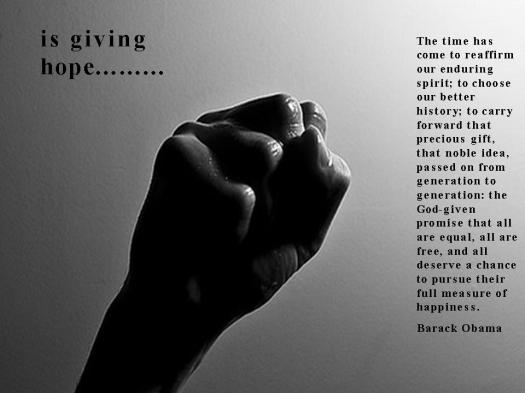
And just for the record, here is the slide I created tonight.

plp-slide

(Day 108-365 Year 2 by flickrstorm user thp365 )

Reblog this post [with Zemanta]

Why do we blog?

I’ve mentioned recently that my friend Nina has started writing a blog focusing on the early years classroom. She’s doing amazingly well, but already the questions have started.

Why are you doing this?

What do you think will come of it?

etc, etc, etc.

Anyone who blogs has heard it all before. The lack of understanding from some and their disbelief when you explain that you willingly do it in your time away from your workplace, is a more common reaction than the ‘good for you’, comment you might be expecting.

Reading Robert Darnton’s article yesterday, I was struck by something he wrote about the changing nature of publishing;

“The eighteenth-century Republic of Letters had been transformed into a professional Republic of Learning, and it is now open to amateurs—amateurs in the best sense of the word, lovers of learning among the general citizenry.”  

This is why we blog.

We are lovers of learning.

Reblog this post [with Zemanta]

Google and the Future of Books – Robert Darnton’s must read article

Google Book Search car
Image by clarissa~ via Flickr


 If you are at all interested in the future of books and the digitising of collections you must read Robert Darnton‘s article ‘Google and the Future of Books’ written for ‘The New York Review of Books‘. In it he discusses the efforts by Google to digitise millions of books from the collections of research libraries to enable these texts to be searched online. If my reading of the article is correct, Google has recently settled a lawsuit with authors and publishers who were suing for alleged violation of their copyright due to the digitisation of their work. The settlement that has been reached entails the following (I’m taking the liberty of quoting Robert’s words at length here. I can see no better way to explain the decision and its ramifications);

The settlement creates an enterprise known as the Book Rights Registry to represent the interests of the copyright holders. Google will sell access to a gigantic data bank composed primarily of copyrighted, out-of-print books digitized from the research libraries. Colleges, universities, and other organizations will be able to subscribe by paying for an “institutional license” providing access to the data bank. A “public access license” will make this material available to public libraries, where Google will provide free viewing of the digitized books on one computer terminal. And individuals also will be able to access and print out digitized versions of the books by purchasing a “consumer license” from Google, which will cooperate with the registry for the distribution of all the revenue to copyright holders. Google will retain 37 percent, and the registry will distribute 63 percent among the rightsholders.

Meanwhile, Google will continue to make books in the public domain available for users to read, download, and print, free of charge. Of the seven million books that Google reportedly had digitized by November 2008, one million are works in the public domain; one million are in copyright and in print; and five million are in copyright but out of print. It is this last category that will furnish the bulk of the books to be made available through the institutional license.

Many of the in-copyright and in-print books will not be available in the data bank unless the copyright owners opt to include them. They will continue to be sold in the normal fashion as printed books and also could be marketed to individual customers as digitized copies, accessible through the consumer license for downloading and reading, perhaps eventually on e-book readers such as Amazon’s Kindle.

While this represents availabilty of knowledge on an unprecedented scale at what may be a reasonable cost, it also represents the kind of monopoly by a business of an unprecedented scale with the  product being knowledge. And this is where Libraries have missed the boat. As Robert refers to in the article, the opportunity was there to realise the Alexandrian library dream and create a National (international, really) Digital Library with access based on reasonable fees for all. The challenge exists now for Google to not put profit before the public good and ensure that they realise the dream and not destroy it with eagerness for shareholder and company profit.

Robert speaks of what this decision means for Google’s stakehold in all our lives; 

“….the settlement creates a fundamental change in the digital world by consolidating power in the hands of one company. Apart from Wikipedia, Google already controls the means of access to information online for most Americans, whether they want to find out about people, goods, places, or almost anything. In addition to the original “Big Google,” we have Google Earth, Google Maps, Google Images, Google Labs, Google Finance, Google Arts, Google Food, Google Sports, Google Health, Google Checkout, Google Alerts, and many more Google enterprises on the way. Now Google Book Search promises to create the largest library and the largest book business that have ever existed.”

It’s not just Americans feeling the effect of Google Robert, it’s a worldwide phenomenum. I love much of what this company is doing to enable access and delivery of information, but we have to keep in mind that they are a business and not a philanthropic institution. There is the possibility of the stranglehold having an effect on access if the costs they charge get too high. It will be up to us all to keep them in check.  

Please click the link and read the article for yourself. There is so much in it for consideration and there is no way I have done it full justice here.  


Reblog this post [with Zemanta]